Of the Connecticut clergymen turned to the Established Church, and how indiscreet Zeal hurts the Zealot’s Cause.
 Writers’ block · ASA
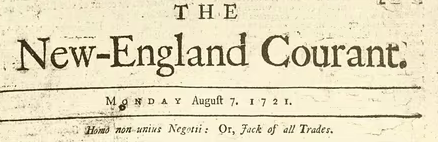
The fourteen letters of Silence Dogood, printed in The New-England Courant, Boston, April to October 1722.
Of the Connecticut clergymen turned to the Established Church, and how indiscreet Zeal hurts the Zealot’s Cause.
A moonlight ramble through the town and the diverting Night-Walkers she meets there.
Quod est in cordi sobrii, est in ore ebrii: the Characters and the many Phrases of the Devourers of Liquor.
The forlorn Petition of a Virgin well stricken in Years, and a Friendly Society proposed for single Women.
A friend’s book proposes an Office of Ensurance for Widows, and Mrs. Dogood commends such Friendly Societies.
Corruptio optimi est pessima: whether a Common-wealth suffers more by pious Pretenders or by the openly Profane.
From the London Journal: without Freedom of Thought there is no Wisdom, and no publick Liberty without Freedom of Speech.
On the want of good Poetry in New-England, the Kitel elegy, and a Receipt to make a Funeral Elegy of your own.
Of Pride, the most hateful of Vices, and the monstrous Hoop-Petticoats that crowd the town.
Answering Ephraim Censorious: the Men share in the Pride and Idleness laid on Women, and are often the Cause of it.